What is crypto in simple words?
Crypto is digital money or digital value that runs on blockchain networks instead of depending only on banks or traditional financial rails.
 SolCreate
Crypto Basics
A beginner-friendly 2026 guide to cryptocurrency, blockchain, wallets, risks and the real reasons people keep asking what crypto actually is.
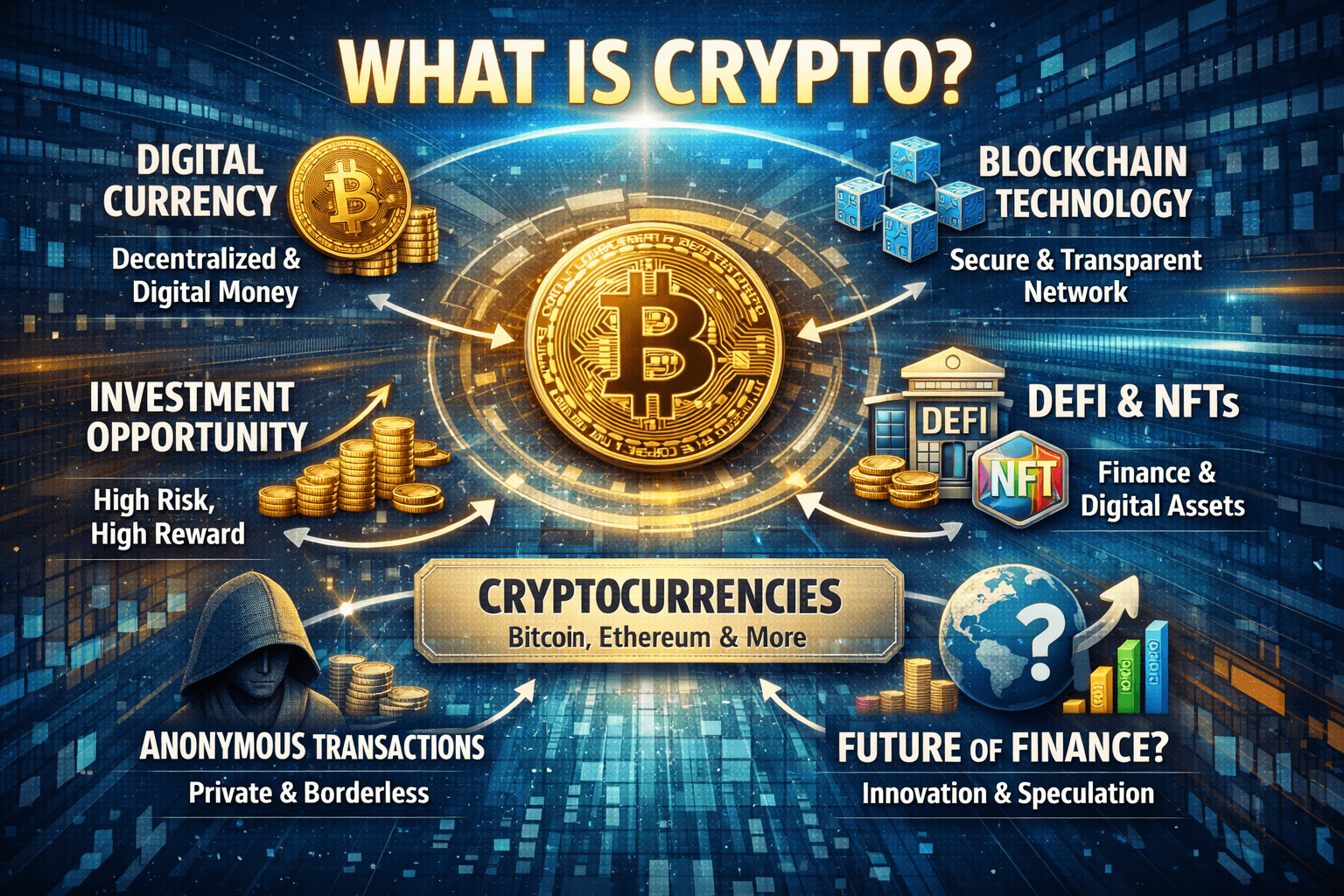
Crypto is a digital form of money or value that runs on blockchain networks. Instead of depending entirely on banks and payment processors, it uses wallets, private keys and decentralized network rules to move and verify ownership.
That simple definition is why the question matters so much. Once people understand what crypto is, the next questions tend to be about wallets, trading, stablecoins, token launches, liquidity, metadata and how on-chain products actually get created.
Definition
Digital money
Crypto is a digital form of value that moves across blockchain networks instead of traditional bank rails.
Core idea
Peer-to-peer
Cryptocurrency lets people send value globally without needing the same kind of central banking structure behind every transfer.
Reality check
High upside, real risk
Crypto can unlock payments, investing and token-based products, but volatility, scams and poor security habits still hurt beginners fast.
The simple explanation
Crypto is digital value that can be owned and transferred online. Some cryptocurrencies are used like money. Others act more like network assets, utility tokens or access layers for applications.
The most important beginner distinction is this: crypto is not just one coin. It is a broader category that includes Bitcoin, Ethereum, stablecoins, utility tokens and many other blockchain assets.
When people search what is crypto, they are often trying to understand whether it is just internet money or something bigger. The honest answer is that it is both: a new kind of digital asset and a new infrastructure layer for payments, apps and tokenized systems.
Core concepts
Digital vs traditional money
Traditional currencies like euros or dollars are issued and managed through central banks and commercial banking systems. Crypto is digital-first and usually runs on decentralized networks instead.
Blockchain as the ledger
A blockchain is the transaction record behind a cryptocurrency network. It keeps track of who sent what, to whom and in what order, without relying on one central database.
Why people care
People explore crypto for global transfers, investing, decentralized finance, digital ownership and because tokenized systems open new product and community models.
How it works
Blockchain
A blockchain records transactions in sequence and makes them visible to the network. That shared ledger is what gives crypto its traceability and network-level history.
Verification
Transactions are verified by the network rather than by a single bank or card processor. Different chains use different models, including mining or staking-based security.
Wallet control
A wallet gives you control over addresses and signing rights. That is powerful, but it also means self-custody mistakes can be costly if you are careless with links or private keys.
Popular assets
Bitcoin is usually the first thing beginners hear about. It is often described as digital gold because it is scarce, widely known and treated by many people as a long-term store-of-value asset.
Ethereum matters because it also acts as application infrastructure. Smart contracts, DeFi apps, NFTs and token creation workflows often live there or take inspiration from it.
Stablecoins matter because they bridge crypto with fiat-like pricing. Many people end up using stablecoins for transfers, trading or liquidity rather than holding only highly volatile assets.
Real use cases
Risks and safety
Crypto is not automatically unsafe, but it is unforgiving. A bad link, fake wallet prompt or rushed transfer can do more damage in a few minutes than a beginner expects.
The safest early habits are simple: use trusted wallets, enable 2FA where relevant, double-check URLs, start with small amounts and do not sign transactions you do not understand.
Main beginner risks
From learning to doing
The broad question what is crypto often leads into more practical questions: what is token metadata, how do you mint more supply, how does liquidity work and how can a beginner create a token without writing Solidity or Rust.
That is where SolCreate fits naturally. The platform takes the token-creation side of crypto and makes it more approachable with a 0.03 SOL Solana token creator, a 0.001 ETH Ethereum token creator and the post-launch tools creators usually need next.
Solana Token Creator Guide
Start with the 0.03 SOL no-code Solana token creator if you want to move from learning crypto into launching a token.
Ethereum Token Creator
Use the guided Ethereum creator if the goal is a standard ERC-20 launch with a fixed 0.001 ETH SolCreate fee.
Pricing
See creator fees and which post-launch tools stay fixed once you move beyond the basics.
FAQ
What is crypto in simple words?
Crypto is digital money or digital value that runs on blockchain networks instead of depending only on banks or traditional financial rails.
Is cryptocurrency real money?
It is real digital value that people can buy, sell, transfer or hold, but it behaves differently from government-issued currencies and is often much more volatile.
How does crypto work?
Crypto works through blockchain networks that record transactions, verify ownership and let users move value with wallets and private keys.
Is crypto safe for beginners?
It can be safer when beginners use trusted wallets, strong security habits, small test amounts and careful research, but scams and wallet mistakes are still common.
What is the difference between Bitcoin and Ethereum?
Bitcoin is best known as the original decentralized digital asset, while Ethereum is also a programmable blockchain used for smart contracts, apps and token creation.
What can you do with crypto besides investing?
People use crypto for payments, stablecoin transfers, DeFi, NFTs, token launches, community rewards and blockchain-based applications.
Related guides
Final CTA
The fastest next step is not another giant theory page. It is using a clear, guided creator flow. SolCreate lets you start with a 0.03 SOL Solana token creator or a 0.001 ETH Ethereum token creator, then move into metadata, minting, liquidity and later launch actions when you are ready.