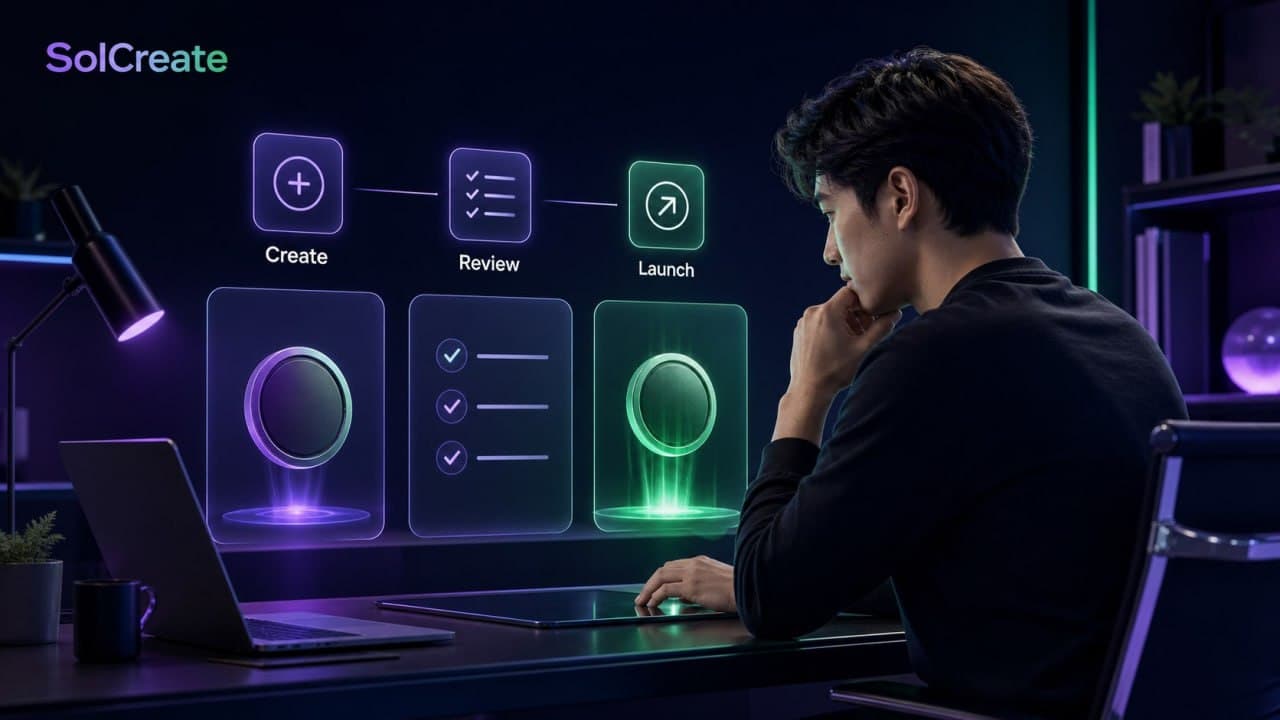
Builders often ask for Solana token creator cost because they want one simple number. In practice, the budget has several layers: creator platform or tool fee, network fees, wallet funding for test actions, metadata, authority decisions, liquidity, distribution and optional vesting, burn or scanner review steps.
Only the first two are strictly part of the mint moment. The rest are launch-readiness costs, because a token that exists on-chain is not automatically ready for buyers, holders, communities or DEX discovery.
1
Creator wallet and network fees
Your creator wallet needs enough SOL to sign transactions and pay the small network fees involved in the token creation flow. Solana fees are usually low, but transactions can still fail if the wallet balance is too tight or if the user tries several actions in a row.
For a beginner launch, budget for more than the exact displayed transaction cost. Keep a buffer for retries, checking the token after creation, sending a small test transfer and using follow-up tools such as metadata, mint, burn or multisender.
2
Token settings and metadata preparation
Token settings do not only affect the transaction. They affect how the project is presented everywhere after minting: token name, symbol, decimals, total supply, logo, description, website links, authority choices and the wallet that receives initial supply.
Metadata mistakes are expensive in a different way. Even when the chain fee is small, a wrong symbol, low-quality logo, broken URL or inconsistent description can make the launch look rushed.
3
Mint authority and freeze authority decisions
Mint authority controls whether additional supply can be created later. Freeze authority controls whether token accounts can be frozen. Some projects have valid reasons to keep an authority temporarily, but public community tokens usually face more suspicion when powerful authorities remain active without explanation.
Before creating the token, decide whether mint authority will be revoked, whether freeze authority will be disabled or kept, who controls active authorities and how the project will explain those choices publicly.
4
Liquidity and first market preparation
Creating an SPL token does not automatically create a liquid market. If the project wants people to trade the token, liquidity planning is a separate step with its own budget, pool route, pair choice and LP policy.
Buyers and researchers may look at liquidity size, wallet control, lock duration, holder concentration and authority status together. The best launch budget includes time and funds for clear liquidity communication, not only the creation transaction.
5
Test transfers and distribution
After minting, many teams want to send tokens to community wallets, team wallets, treasury wallets, campaign wallets or early contributors. That distribution needs a clean recipient list, exact amounts, enough wallet balance and a small test batch before public sends.
Distribution clarity matters because holder concentration is often one of the first things buyers inspect. Even honest projects can look suspicious when most supply sits in unclear wallets.
6
Vesting, locks and future actions
Some projects need more than a simple mint and first distribution. A serious launch plan may include vesting, token burns, LP locks, later supply management, marketing wallets or grant wallets.
A strong wallet budget does not need to include every possible tool on day one. It should include enough room to complete the actions the project already plans to announce.